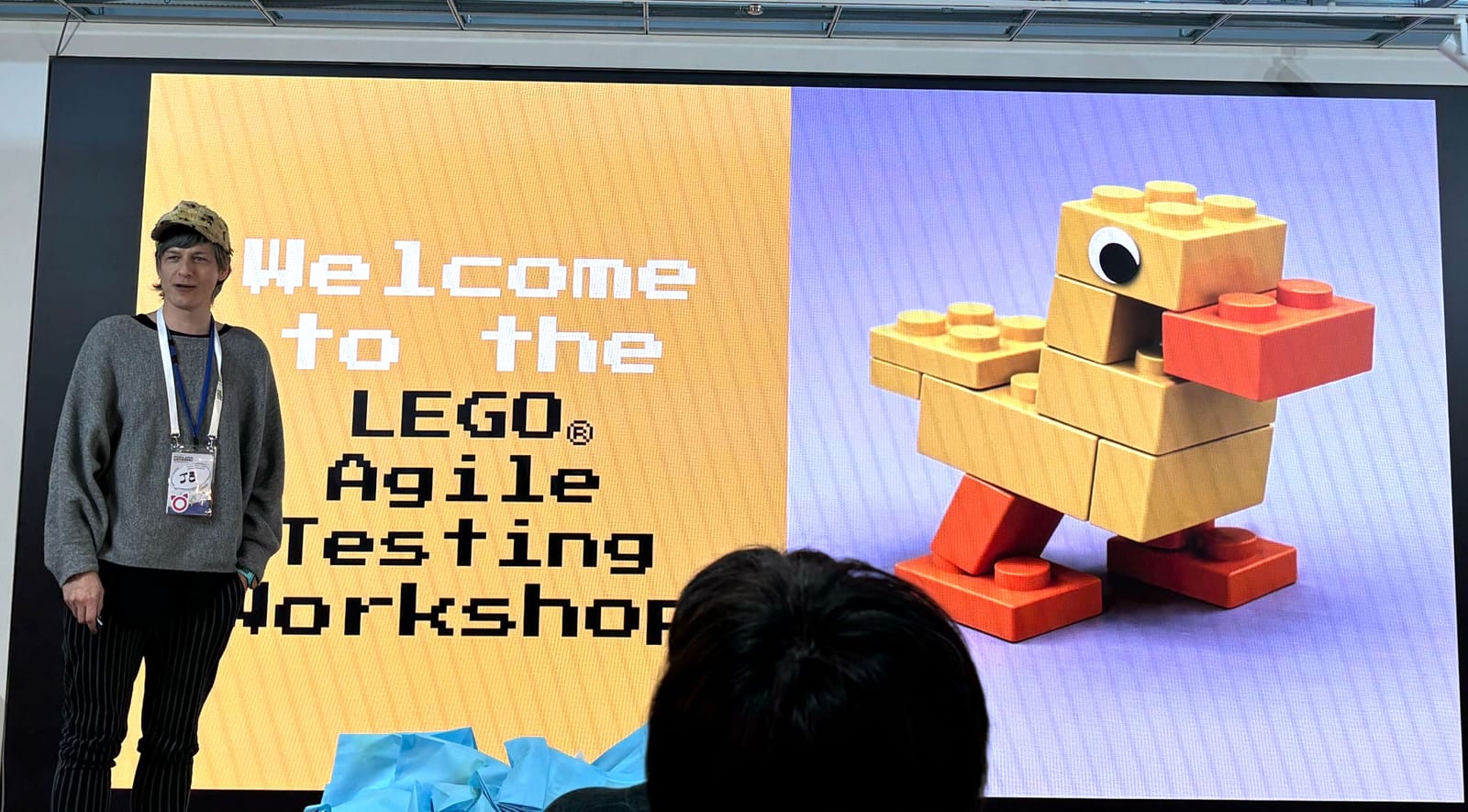
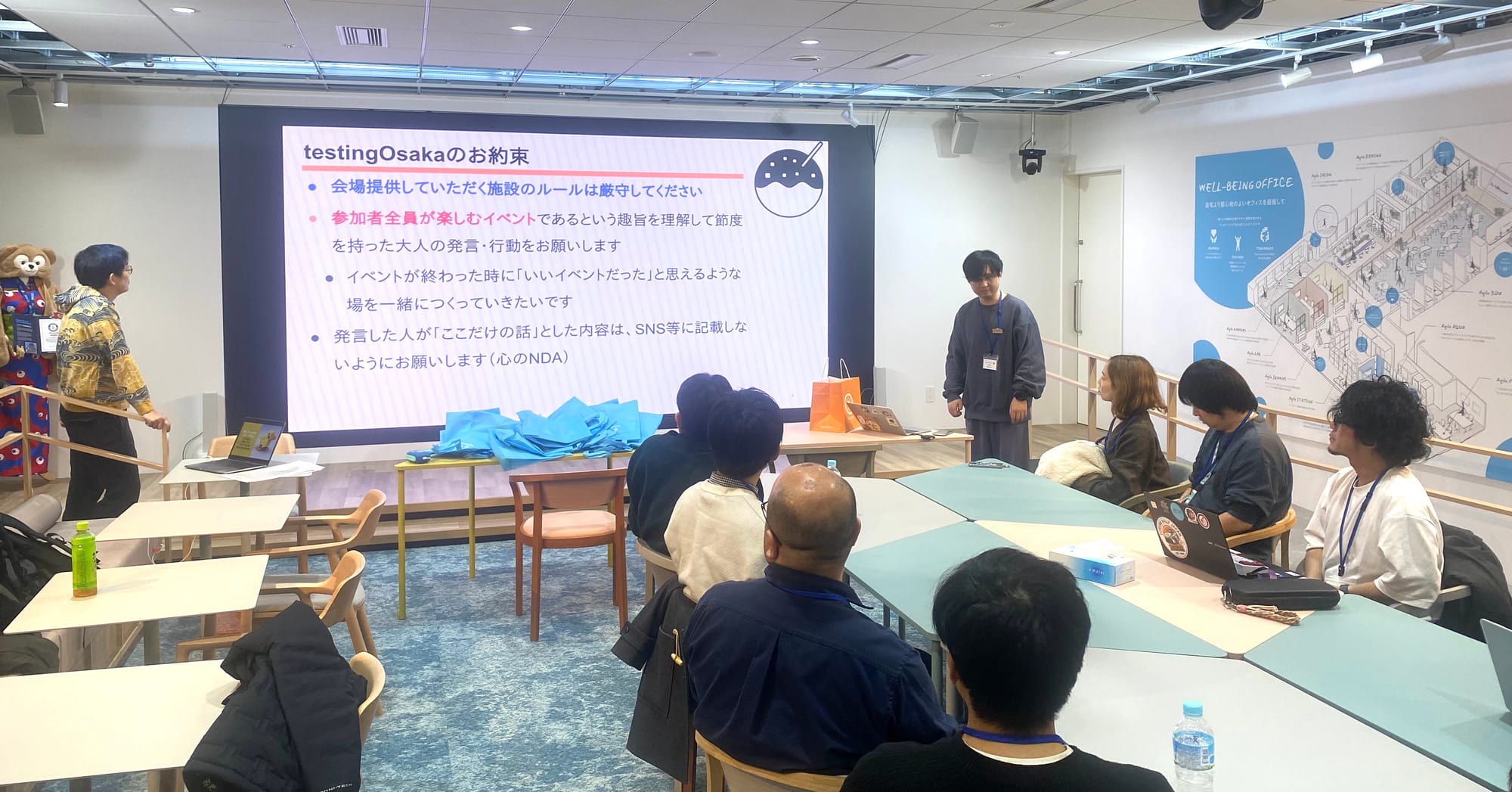
Last Friday, I had the honor to be invited to facilitate a workshop for the testingOsaka community, at Agileware's office.
Yamazun, the organizer of the event had joined last year one of my public class of Registered Agile Testing, and, after a few conversations we shared our motivation to spread more love to testing communities outside of Tokyo, and agreed to "do something" together at Osaka.
At this moment, I had no idea about what "do something" would be, or should be. I trusted that I would eventually come up with a "yamaneco spirit" idea.
So I decided to come back to one of my core principles: don’t look for the right answer, look for the right question.
I have been running our Agile Testing training for more than two years, and did more than 20 classes. I am confident that this is a well oiled learning experience for individuals, teams, or organizations. However I did not feel like taking some parts of it would make sense in a community event context. I was also feeling like challenging myself to create a fresh new experience around the agile testing values. I was feeling like I wanted participants to actually build something concrete, and test it, and feel the dysfunctions that often emerge in organizations.
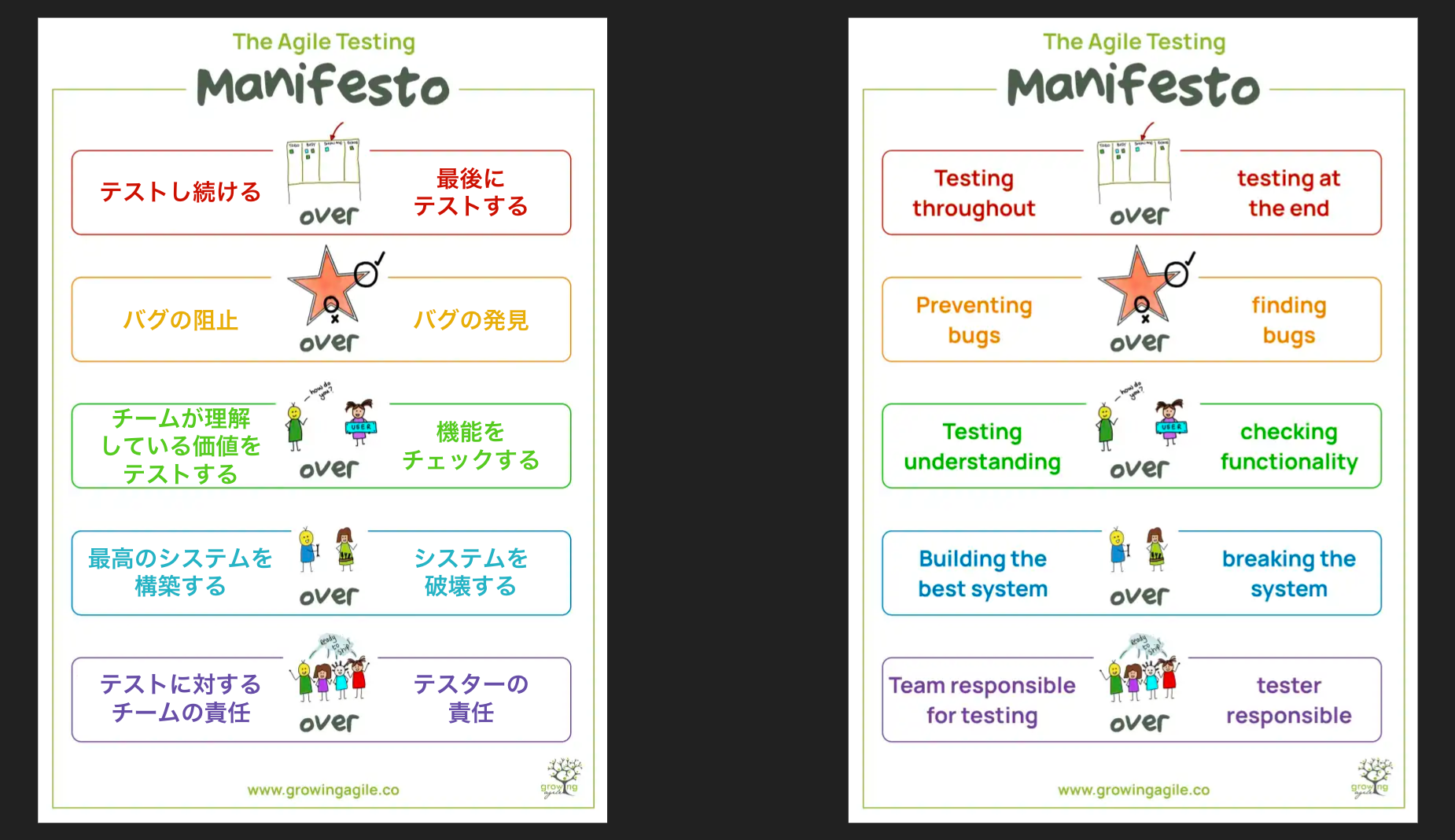
How may we create a learning experience around the Agile Testing Manifesto through building and testing a product, in a 2 hours format, without writing code, and with a real working environment context?
And it has to be extremely fun, because yamaneco.
I had never used Lego before in a workshop, so it naturally came as a strong option for this new challenge.
I decided to use another principle that I had applied for our Corporate Theater Workshop: if you want to experience the value of a new mindset, first play their opposite, play it hard, to the extreme, so that it appears ridiculous, funny, and broken.
And here we are, Agile Testing Lego Workshop!
Gather requirements, design, build, test, and release a Lego product to your stakeholders.
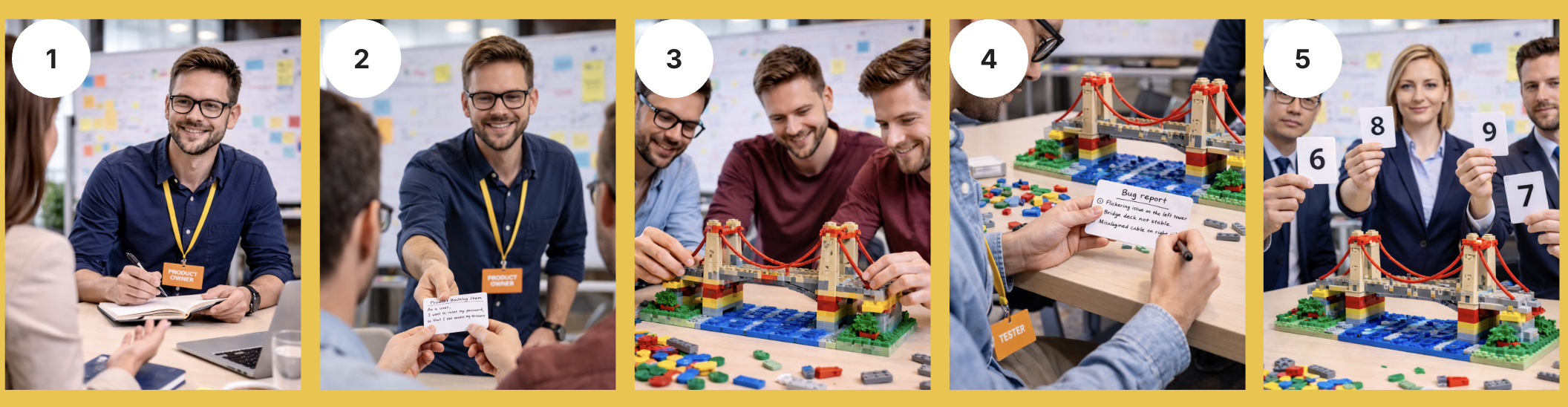
First do it in a world where information is opaque, different roles are too busy to collaborate, and where testing is an obscure quality assurance division thing that is better to run at the very end.
Second, incorporate all the 5 values of the Agile Testing Manifesto and see the results for yourself.
Ryo and I facilitated the workshop, and we all laughed as much as we learned!
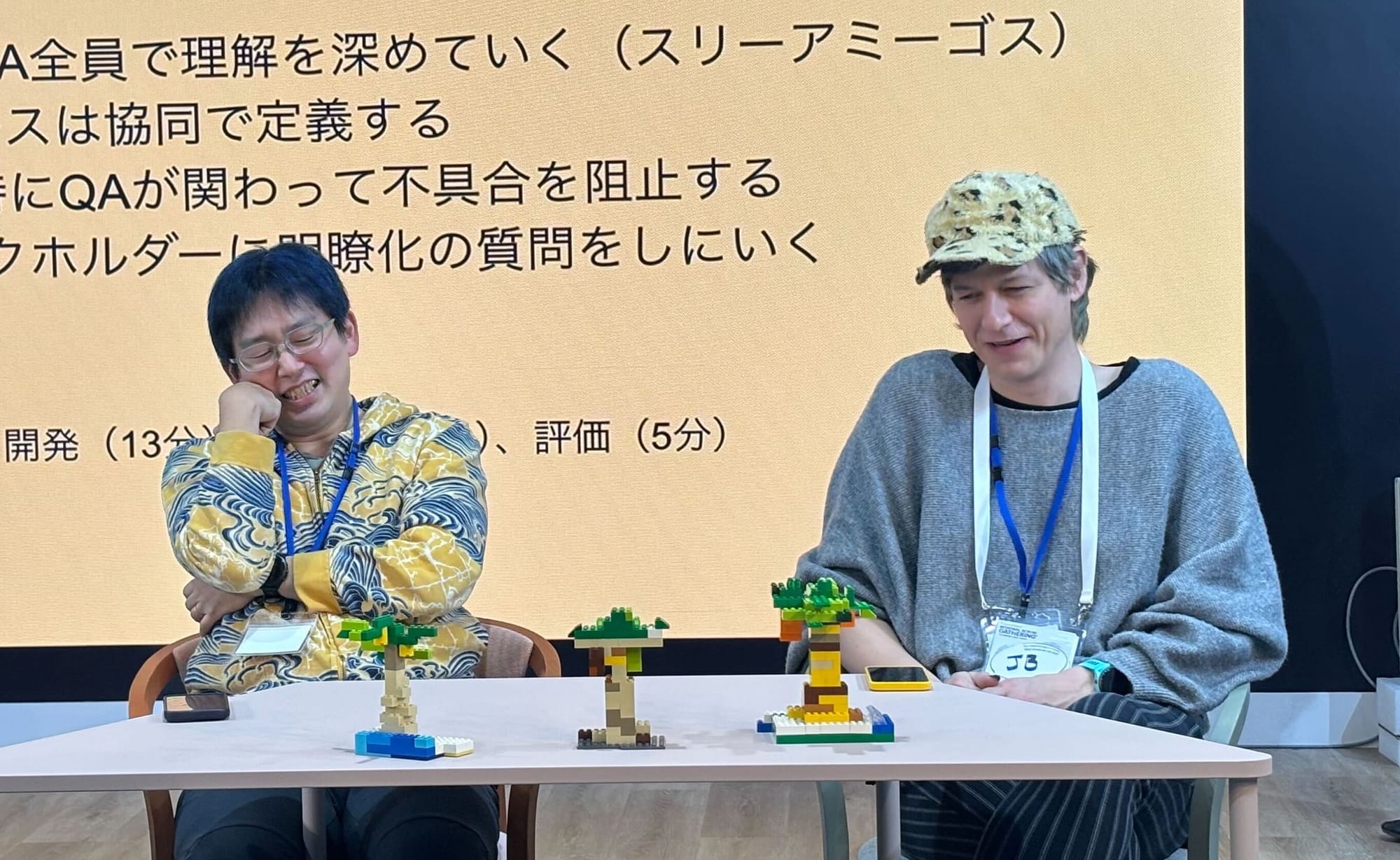
We will certainly run it again, and if you are interested to experience it with your organization, leave us a note!