When Theme Meets Opportunity
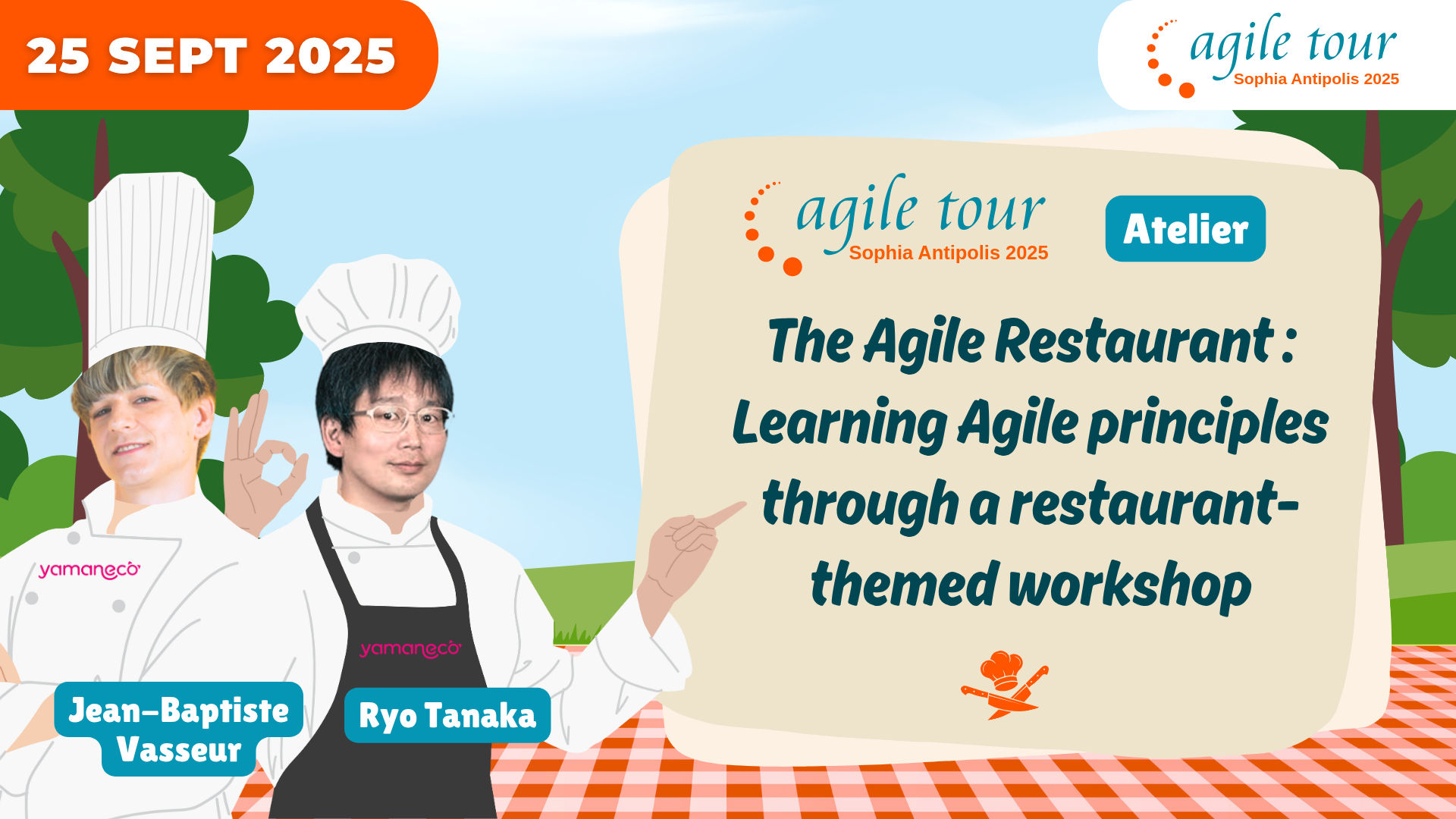
When the organizers of Agile Tour Sophia Antipolis announced "cuisine" as this year's theme, the choice was obvious: we had to bring the Agile Restaurant workshop to France. This simulation workshop, originally developed independently, seemed like the perfect fit. After securing permission from ITpreneurs Japan, we packed our bags and headed to the French Riviera to see how this Japanese-created workshop would resonate with a European audience.
 s.degioanni
Surprisingly Universal, Yet Distinctly French
The Bottom Line: Despite initial concerns about cultural differences, participants engaged enthusiastically with the workshop. The core dynamics translated remarkably well across cultures, though French participants brought their own unique flair—particularly when role-playing difficult customers.
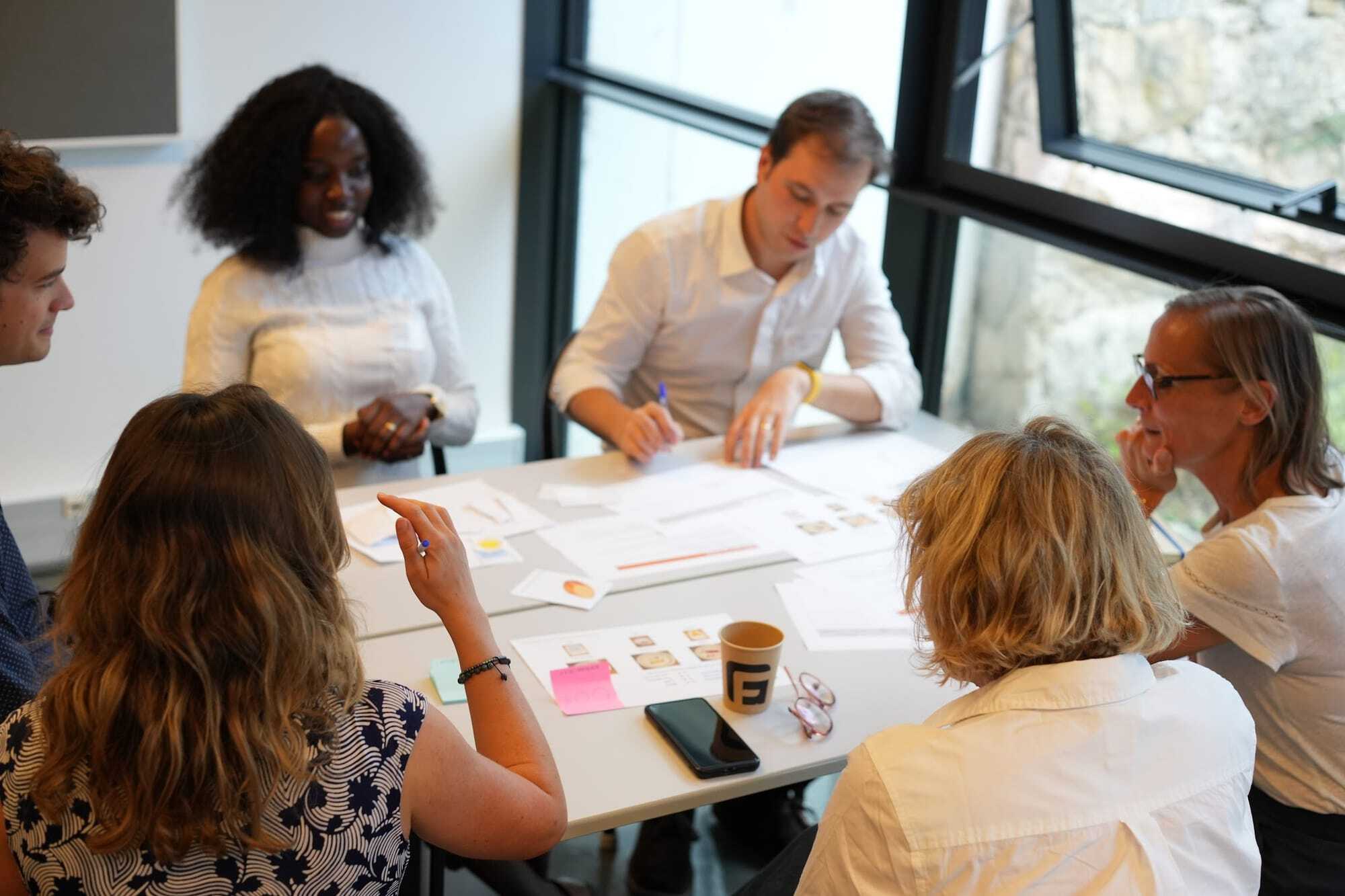
What Stayed the Same
Contrary to our expectations, the fundamental workshop experience remained consistent. French participants were bright, engaged, and eager to participate. They showed genuine interest in the simulation and grasped the agile concepts naturally. This universality was itself a pleasant surprise—good workshop design, it seems, transcends borders.
Where France Showed Its Colors
The real cultural difference emerged in how participants embodied the "difficult customer" role. In Japan, challenging customers typically follow a predictable pattern: they sit down first, then become demanding—asking for faster service or making aggressive orders.
French participants took an entirely different approach. Some never sat down at all. One memorable customer spent the entire time chatting with the waiter, engaging in endless small talk without placing a single order. Another brought a suitcase and demanded special accommodations—for their dog. When I attempted to help by picking up what appeared to be a dropped item, I got scolded: "Don't touch my dog!" The "item" was actually a water bottle for the pet.
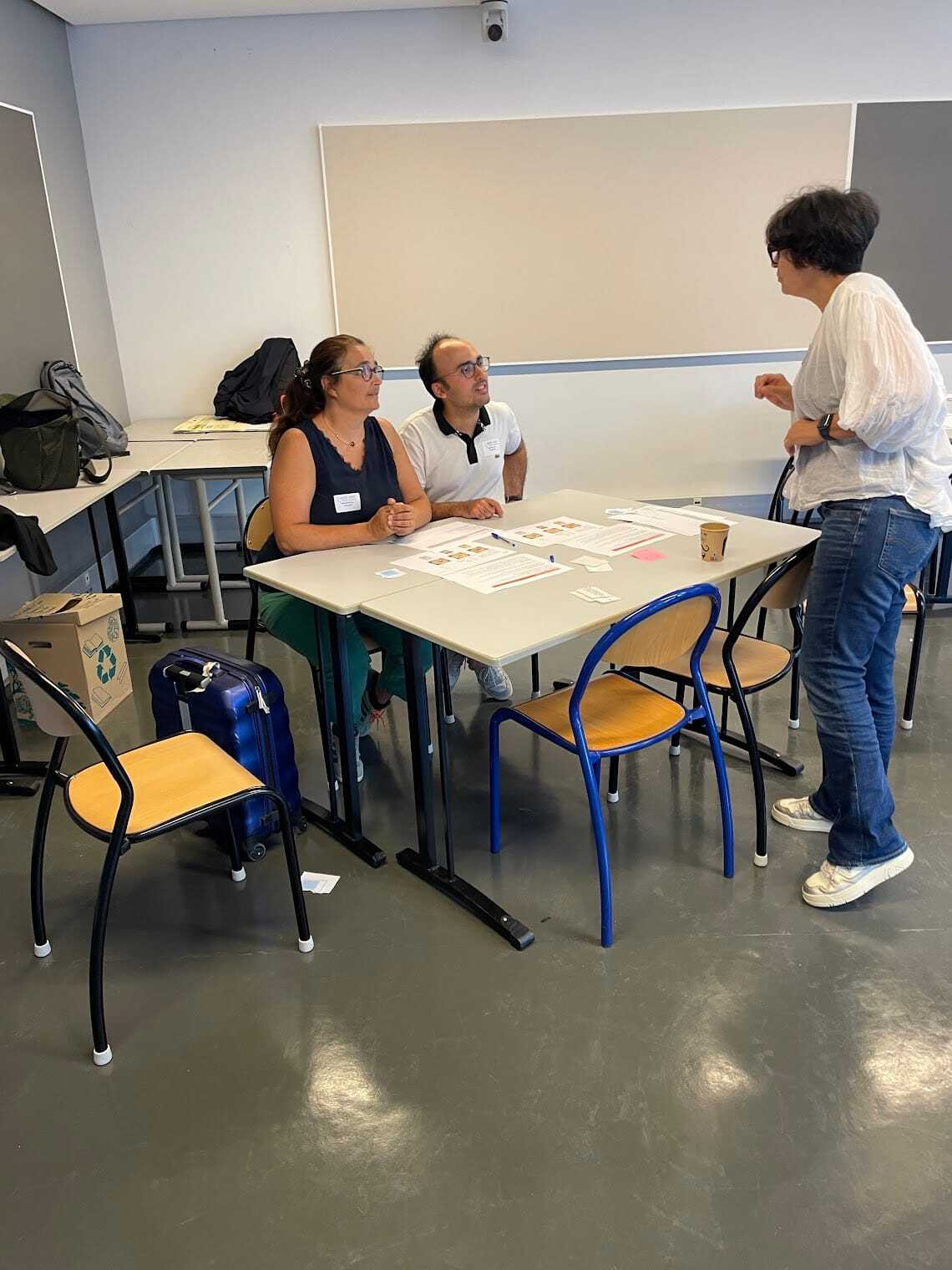
This level of creative chaos rarely appears in Japanese sessions. French participants fully committed to the role, demonstrating an imaginative boldness that pushed the simulation in unexpected directions.
Adapting the Workshop: Strategic Simplifications
Given our 110-minute time constraint, we condensed the standard workshop significantly. We ran three quick sprints with minimal lecture time, focusing on experiential learning over theoretical explanation.
Cultural Adjustments We Made:
- Removed oshibori (hot towels): A Japanese restaurant staple with no French equivalent
- Modified water service: In France, water isn't automatically served—customers must request it
- Localized the menu: Thanks to contributions from Mogami-san, we incorporated authentic items like baguettes and other French cuisine elements
- Eliminated certain props: We streamlined elements that wouldn't translate culturally
What We Kept: Interestingly, we retained many Japanese elements, framing it explicitly as a "Japanese workshop." Participants approached it with that context, so including sushi or other Japanese items on the menu would have been perfectly acceptable.
The Missing Catchphrase
One expectation that went unfulfilled: we anticipated hearing "Oui, Monsieur!" (the famous kitchen response from cooking shows and dramas). It never came. While the phrase exists in French culinary culture, it's not delivered with the dramatic flair popularized by television. Sometimes reality is more subtle than media portrayals suggest.
The Chaos Card Moment
The workshop includes "action cards"—sudden, disruptive requests that create realistic chaos. Examples include celebrating someone's birthday or demanding WiFi access mid-service.
When we introduced these cards, participants' initial reactions were intense—genuine surprise mixed with "Are you serious?" disbelief. This suggested a strong sense of fairness: throwing unexpected challenges at people felt like breaking an unspoken social contract.
However, as the workshop progressed, participants embraced the chaos. Later groups drew cards with enthusiasm, shouting "Let's do this!" The initial resistance transformed into playful engagement, showing how quickly people adapt when they understand the learning purpose.
Unexpected Insights: The Circle of Learning
Despite eliminating formal lecture time, we preserved the closing reflection circle. Participants sat together, sharing what they'd learned from the experience.
This segment proved remarkably powerful. Even without explicit instruction, participants extracted profound insights about agile principles, customer service, and team dynamics. The discussion revealed a particularly deep learning moment: the tension between wanting to provide excellent service and recognizing when customer demands cross a line.
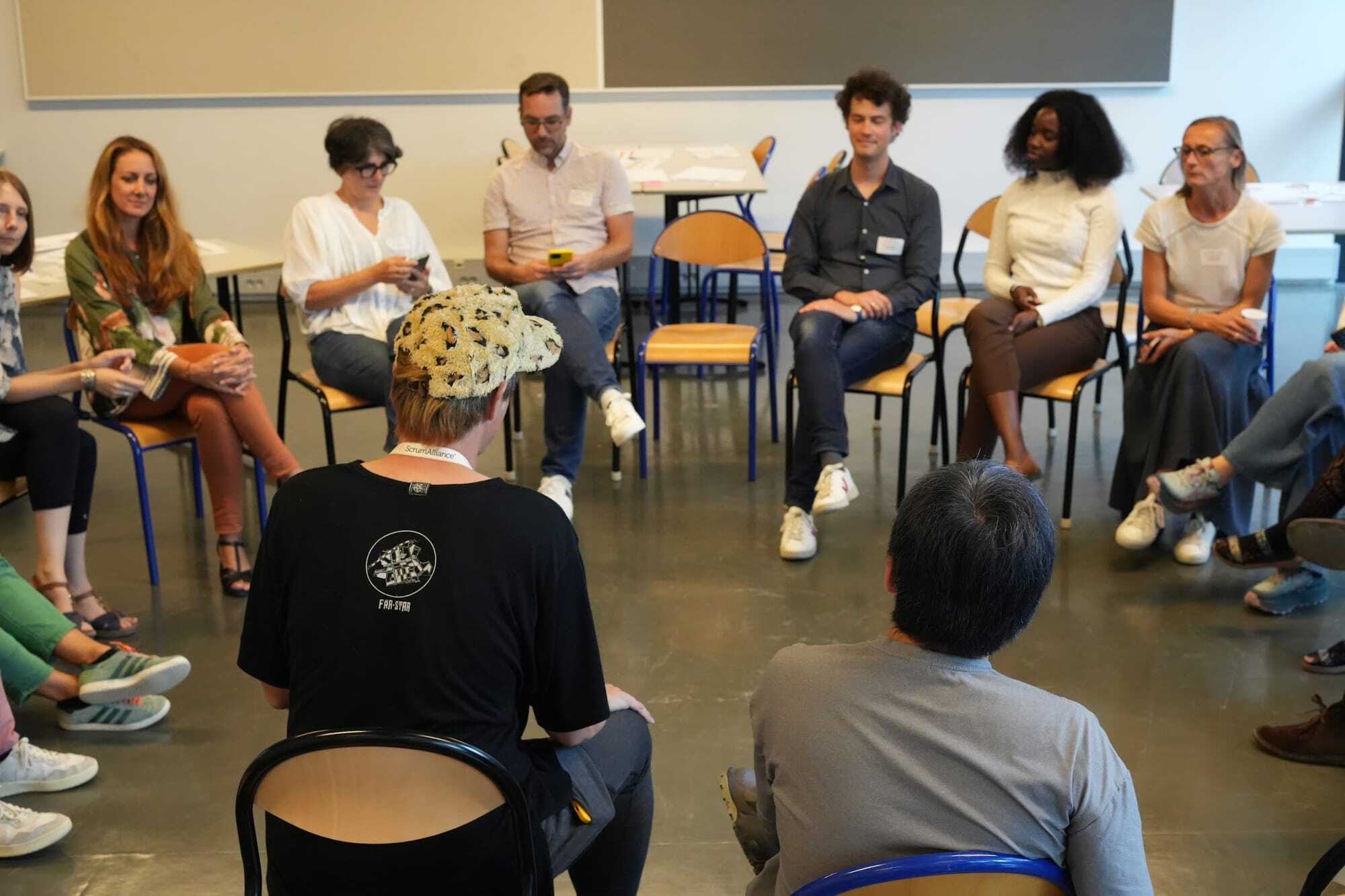
One participant articulated it beautifully: "We want to serve our customers well, but if we simply comply with every demand, we'll break. We need the courage to say no when someone crosses a boundary."
This insight—that good service requires boundaries, not just accommodation—emerged organically from the simulation. It represents exactly the kind of nuanced understanding we hope participants will take away.
Lessons for Cross-Cultural Workshops
What We Learned:
- Good workshop design is culturally adaptable: Core mechanics and learning objectives translate well when properly contextualized
- Embrace local creativity: Different cultures will engage with activities in unique ways—this enriches rather than diminishes the experience
- Simplification can strengthen impact: Removing lecture time forced participants into deeper experiential learning
- Physical space matters: We intentionally created obstacles in the room layout (extra chairs and tables between kitchen and dining area), curious to see how teams would navigate them. Participants initially hesitated, unsure if they could rearrange furniture, but eventually adapted—mirroring real workplace constraints
- The reflection circle is essential: Even without formal teaching, guided reflection helps participants crystallize their own insights
Final Thoughts
Taking a workshop across cultures requires humility, flexibility, and trust in participants' ability to extract meaning from experience. The Agile Restaurant workshop proved robust enough to travel while flexible enough to accommodate French flair.
Would we change anything for next time? Perhaps add more explicitly French elements to the menu. But overall, the experience confirmed that agile principles—like good food—have universal appeal, even if every culture adds its own distinctive seasoning.

The Agile Restaurant workshop simulates restaurant operations to teach agile principles through hands-on experience. Participants take on roles as kitchen staff, servers, and customers, experiencing the challenges of iterative delivery, customer collaboration, and responding to change.